.png)
.avif)


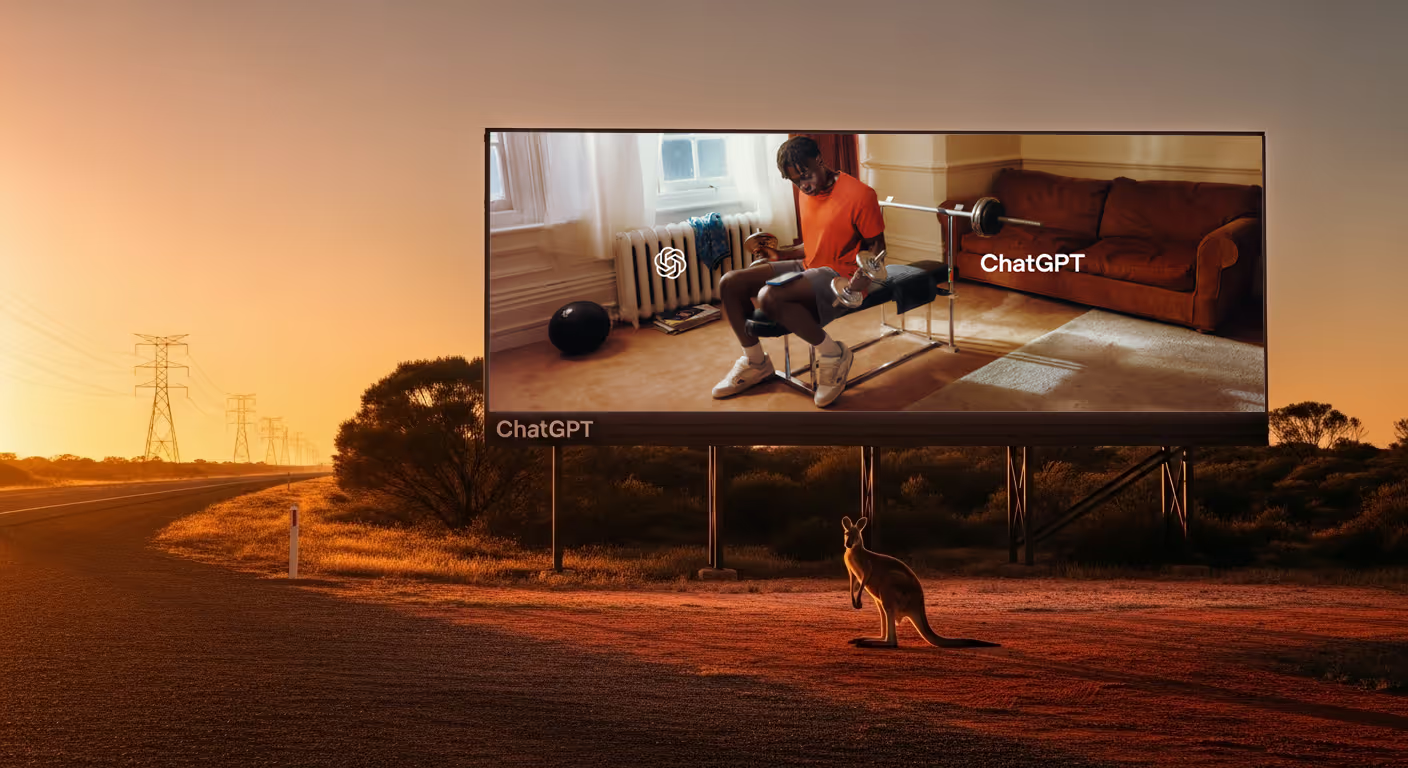
What launched in Australia on 17 April 2026?
OpenAI announced the expansion on 26 March 2026, naming Canada, Australia and New Zealand as the first markets beyond the United States. Ads began appearing in Australian accounts on 17 April, a date recorded in OpenAI's release notes and confirmed by Australian trade press. The gap between the US pilot opening and Australian availability was eight weeks.
The pilot shows labelled sponsored cards beneath ChatGPT's answers for logged-in adult users on the Free and Go tiers. Plus, Pro, Business, Enterprise and Education accounts see no ads. OpenAI states that ads do not influence the answers ChatGPT gives and that conversations stay private from advertisers, with users able to view, dismiss or comment on each ad.
Australia earned its early slot on usage. OpenAI said Australian usage more than doubled in the 12 months before launch, and the company has established a local Australian team to support the rollout. ChatGPT serves more than 800 million weekly active users globally, and IBISWorld puts Australian online advertising revenue at A$19.2 billion for 2025-26, the pool this new inventory competes for.
The rollout so far
- August 2025: ChatGPT Go launches as a low-cost tier and reaches 171 countries.
- Mid January 2026: OpenAI brings Go to the US at US$8 a month and confirms ads will be tested on the Free and Go tiers.
- 9 February 2026: the US pilot goes live for logged-in adults, at a reported US$200,000 minimum spend and CPMs near US$60.
- March 2026: Reuters reports the US pilot passed US$100 million in revenue inside six weeks, and Sensor Tower counts more than 100 advertising brands, 44 per cent of them retailers.
- 26 March 2026: OpenAI extends the pilot beyond its planned end date and announces expansion to Canada, Australia and New Zealand.
- 13 April 2026: the minimum spend drops to a reported US$50,000.
- 17 April 2026: ads go live in Australia, New Zealand and Canada, the first markets outside the US.
- 5 May 2026: the self-serve Ads Manager opens in beta to US advertisers with CPC and CPM bidding and no minimum spend.
- 22 May 2026: partner buying and the beta Ads Manager extend to Australia, CPC bidding arrives, and Conversions API and pixel measurement roll out across ad markets, with billing still handled in the US.
- Through 2026 (expected): local billing for Australian advertisers and expansion to further markets, which OpenAI says it hopes to reach this year.

What does it cost, and how do you buy?
Pricing has moved three times in ten weeks. The US pilot opened on 9 February at a reported US$200,000 minimum spend with CPMs near US$60. On 13 April the minimum dropped to a reported US$50,000, and CPMs have settled between US$15 and US$40 depending on category. OpenAI has not published official rate cards, so treat all pricing as trade-reported.
Buying runs through OpenAI directly, with two-month insertion order commitments reported from late March, or through agency partners. Dentsu, Omnicom, Publicis and WPP are named partners, and Adobe, Criteo, Kargo, Pacvue and StackAdapt are integrated on the adtech side. The self-serve Ads Manager opened in beta to US advertisers on 5 May, and on 22 May OpenAI extended partner buying and the beta Ads Manager to Australia, adding CPC bidding alongside CPM. The constraint sits in the billing arrangements. Registration and payment run through OpenAI's US operation in US dollars, so most Australian businesses cannot complete self-serve sign-up, and the practical entry points remain the agency partners or an advertiser with US billing in place. Australians began receiving ChatGPT ads in April, while the ability to buy them is still limited to a much smaller group.
Measurement is the weak point. Advertisers receive aggregated views and clicks, early participants described weekly file-based reporting, and the Conversions API and pixel measurement announced on 22 May are new and unproven at local scale. Sensor Tower counted more than 100 brands in the US pilot by March, 44 per cent of them retailers. Agencies report spend concentrating in travel, retail, automotive and technology, and WPP Media sees strong signals in travel and local intent, where users research in ChatGPT and click through to maps or websites to act.
At Bushnote, we read the current product as a reach test, and brands entering now should instrument their own measurement: distinct landing paths, branded search lift, and offer codes that survive thin platform reporting.
Which Australian law already applies?
The Australian Consumer Law, found in Schedule 2 of the Competition and Consumer Act 2010, applies to every claim a brand makes in or around ChatGPT. Copy produced by a model carries the same liability as copy produced by a person, so product descriptions, pricing statements and comparisons need documented review before launch. The framing of recommendations matters too, since users treat conversational answers as authoritative.
The Privacy Act 1988 (Cth) and the Australian Privacy Principles govern the data side. OAIC pixel guidance treats technical identifiers, including IP addresses, device IDs and hashed emails, as personal information where combination makes a person identifiable. Chat queries and intent signals look attractive for targeting, and the safe default is to treat assistant-derived data as personal information until counsel concludes otherwise. Tranche 1 of the Privacy Act reforms has passed, tranche 2 remains in development, and the signalled direction includes tougher penalties and stronger OAIC powers.
The Spam Act 2003 (Cth) still requires consent, accurate sender identification and an unsubscribe facility for commercial electronic messages, which covers any email or SMS campaign personalised with AI. Australian privacy advisers expect "more accountability, more enforcement and higher expectations" on how marketers collect, share and use personal data, and a documented claims and data register is the cheapest way to meet that bar.
Should your brand buy ChatGPT ads yet?
Four advertiser categories are excluded from the pilot: dating, health, financial services and politics. Ads are also suppressed around sensitive topics such as health and mental health. An Australian lender, insurer or advice firm cannot buy its way into ChatGPT today regardless of budget.
For categories inside the pilot, the case is strongest where spend already concentrates: travel, retail, automotive and technology. The test suits brands that can commit a reported US$50,000, accept aggregated reporting, and value early learnings about conversational placements while the buying side remains narrow.
For everyone else, the organic answer carries the recommendation. Sponsored cards sit beneath the response, while the response itself draws on sources the model trusts. Structured content, entity clarity and citations from authoritative Australian sources decide whether your brand appears inside that answer. This is the AEO work Bushnote runs for clients, and the excluded categories have the most to gain from it, since organic visibility is the only ChatGPT placement open to them.
Readiness before spending looks like this: a claims review process under the ACL, privacy notices that cover AI processing, measurement instrumentation outside the platform, and content structured for machine reading.
What changes next?
OpenAI says it hopes to reach many more markets this year, and the US pattern points to where Australia goes next. The US minimum fell from US$200,000 to US$50,000 in ten weeks, then self-serve removed the floor entirely on 5 May. Self-serve nominally reached Australia on 22 May, and the remaining barrier is billing: when OpenAI stands up local Australian billing, entry drops from a US arrangement to a credit card.
Measurement should mature under agency pressure, with conversion tracking the loudest request from early participants. Plan any media test on the assumption that reporting stays thin through 2026.
Regulatory attention will follow the money. Disclosure of sponsored content inside conversational answers sits squarely under the ACL's misleading conduct provisions, and the OAIC's interest in profiling extends naturally to conversational context. Privacy Act tranche 2 is the reform to watch.
Our recommendation here is specific. Brief legal on the exclusions and the claims process now, run an AEO audit before local billing opens, and build the measurement scaffolding this quarter. Brands that hold strong organic positions when buying opens up locally will pay less to defend them.
TLDR
ChatGPT ads went live in Australia on 17 April 2026 for Free and Go users, with a reported US$50,000 minimum, thin measurement, and financial services among the excluded categories. The beta Ads Manager reached Australia on 22 May, although US-based billing keeps most local advertisers buying through agency partners. The organic answer still carries the recommendation, and that placement comes from AEO work rather than media spend.
Key Takeaways
- ChatGPT ads went live in Australia on 17 April 2026 for logged-in adults on the Free and Go tiers, and every paid tier stays ad free.
- Entry pricing fell fast: a reported US$200,000 minimum and US$60 CPM at the February US launch became a reported US$50,000 minimum and US$15 to US$40 CPMs by mid April.
- Dating, health, financial services and politics advertisers are excluded, and ads are suppressed around sensitive topics.
- OpenAI extended partner buying and a beta self-serve Ads Manager to Australia on 22 May, adding CPC bidding plus Conversions API and pixel measurement.
- Billing still runs through the US, so most Australian businesses receive ChatGPT ads without being able to buy them, and the working entry points are the global agency partners or a US billing arrangement.
Citations
- OpenAI. Testing ads in ChatGPT (updated 26 March 2026).
- OpenAI. Our approach to advertising and expanding access to ChatGPT.
- AdNews. Media agencies kick the tyres as ChatGPT ads land in Australia, April 2026.
- Mi3. OpenAI expands ChatGPT ads pilot to Australia, New Zealand and Canada, 27 March 2026.
- Mi3. OpenAI expands ChatGPT ad buying and measurement tools in Australia, 22 May 2026.
- Axios. OpenAI launches self-serve ad platform, 5 May 2026.
- Adweek. OpenAI Opens ChatGPT Ads to Self-Service Platform, May 2026.
- The Keyword. ChatGPT Ads Expand to Australia, New Zealand, and Canada, April 2026.
- OpenAI. Advertise in ChatGPT, advertiser sign-up.
- IBISWorld. Online Advertising in Australia, Market Size 2026 (Industry Report OD5505).
- SafetyCulture. The Ultimate Guide to Australian Consumer Law.
- Lemonade Digital. Data privacy in digital marketing: why compliance equals performance in Australia.


