

Turning specialist journalism into a stronger publishing business.
A publication with valuable stories. A platform built to make them go further.
Australian Conveyancer is the specialist newsroom for Australia's conveyancers and property lawyers. It reports daily, publishes a print magazine, records podcasts and runs What's Next?, its industry event.
Great journalism is no longer enough to sustain a publisher.
A story can take hours to report and be forgotten by tomorrow. A podcast can attract an audience that never visits the publication. A specialist resource can help thousands of practitioners, yet offer a sponsor little beyond a fleeting impression. These are not simply website problems. They are publishing problems. Australian Conveyancer had the journalism, sector relationships, magazine, podcasts and events. The opportunity was to make them work together.
Google search referrals to news publishers are under pressure. Australian Conveyancer needed content that answered practitioners’ questions directly, while giving readers reasons to come back rather than depending on the next search click.
When the same announcement appears on multiple sites, a headline is not enough. The competitive advantage lies in the editorial work around it: explaining what changed, who is affected and what happened before.
The magazine was hosted on Issuu; audiences discovered videos on YouTube; events lived elsewhere. These channels were valuable, but the website could do more to connect them into repeat readership and a clearer proposition for sponsors.
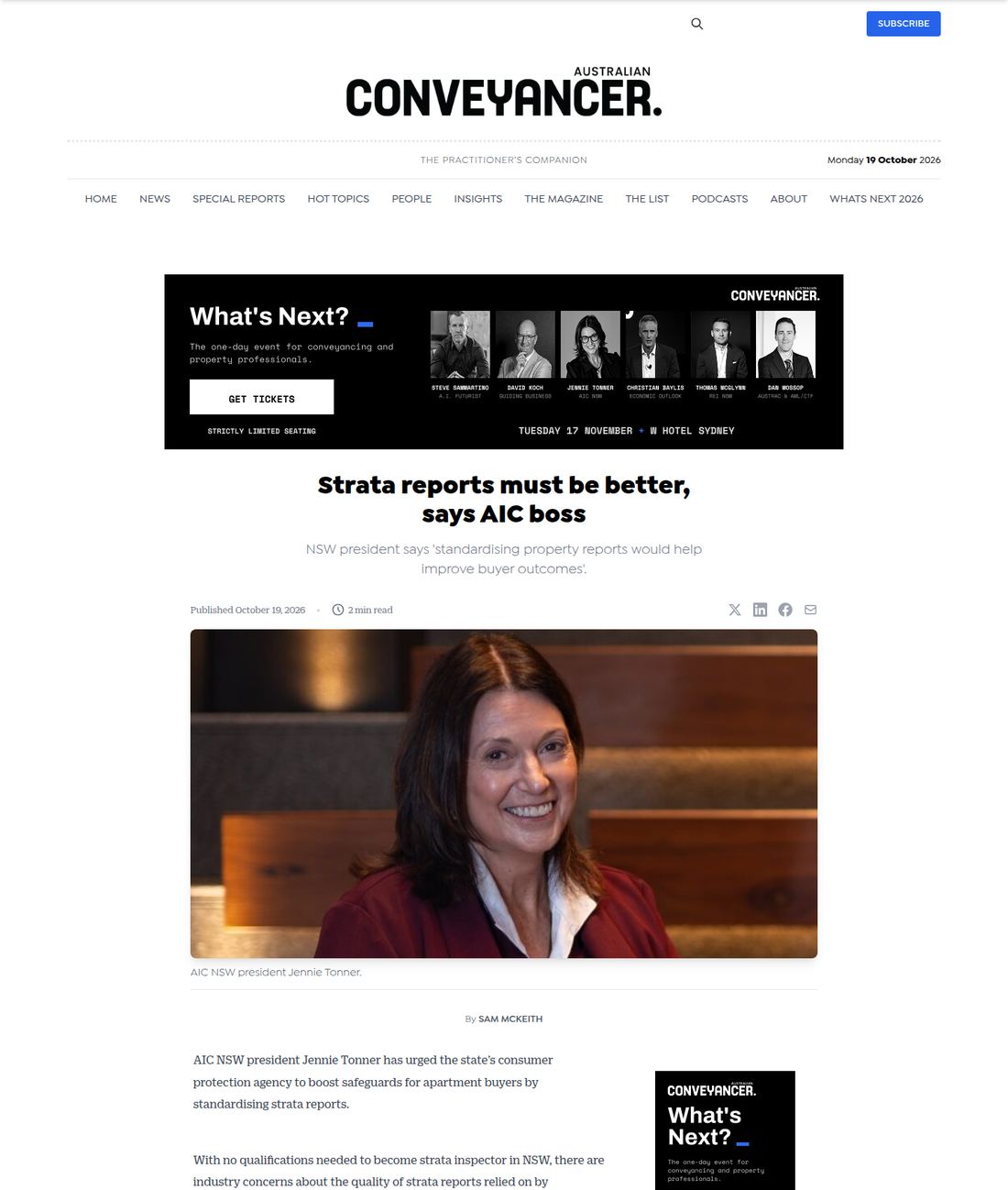
BeforeArticle page
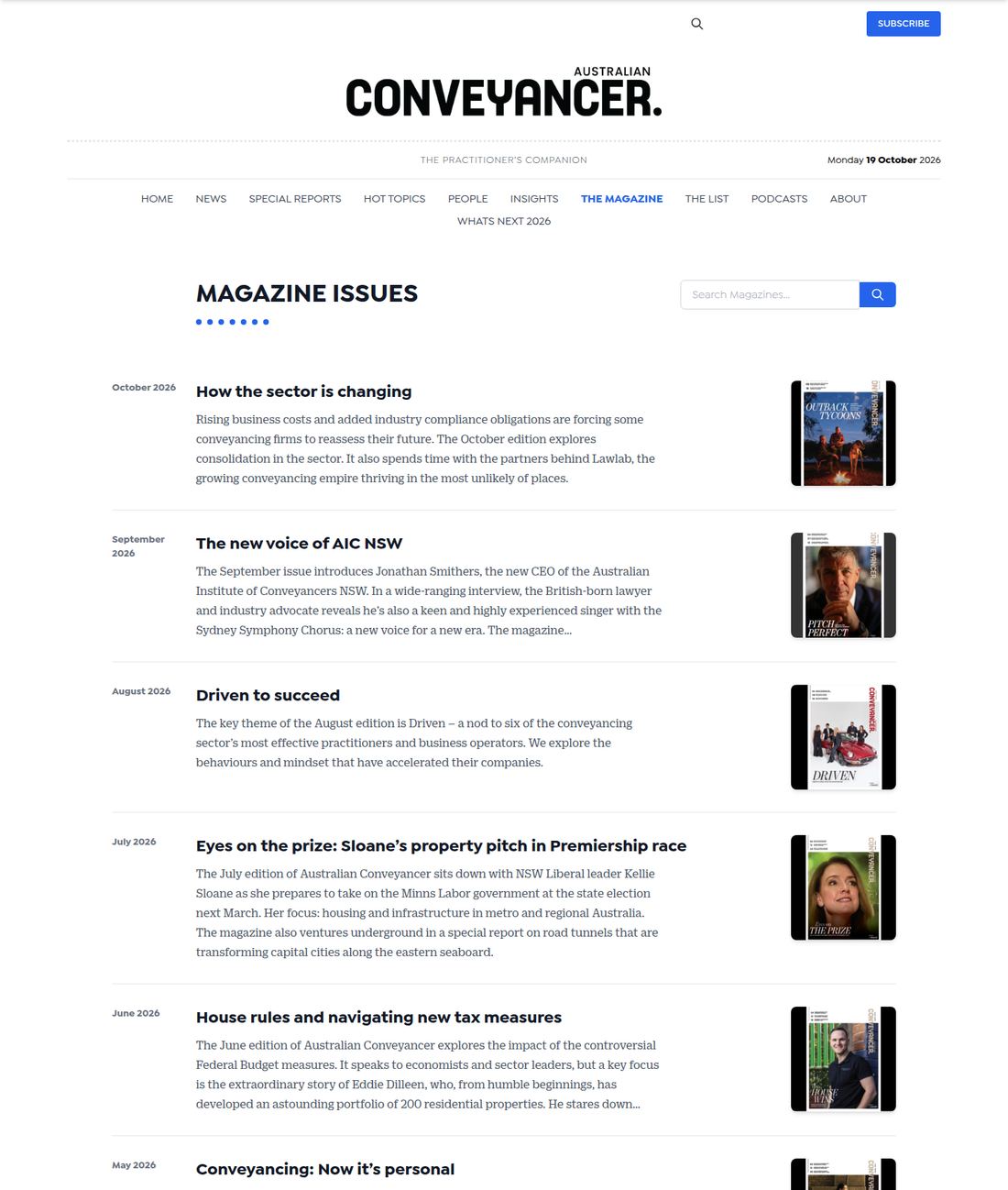
BeforeMagazine, hosted on Issuu
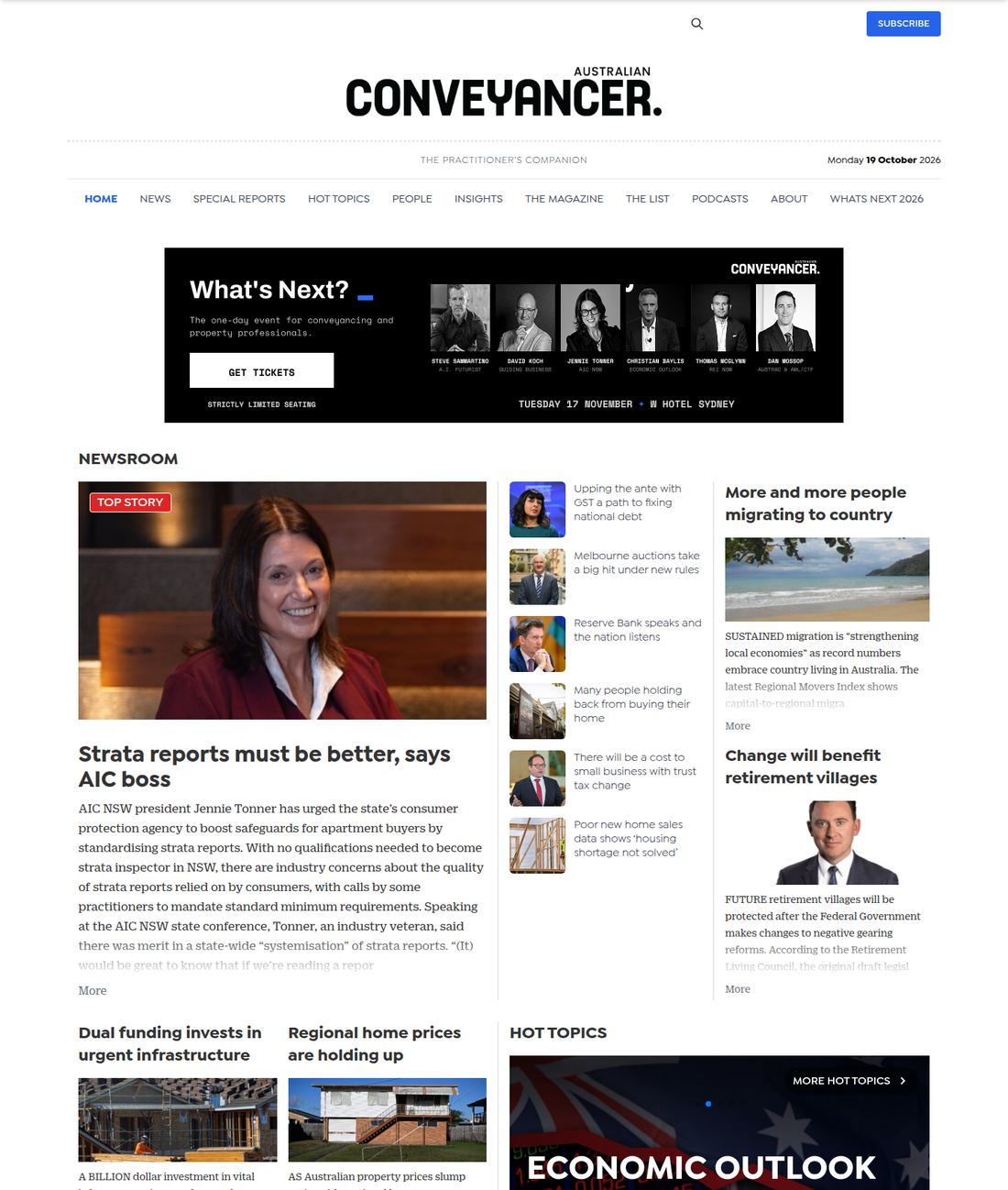
BeforeHomepage
Context: industry-wide search and AI changes are discussed here as market pressures, not measured outcomes for Australian Conveyancer.
Make every story work harder, long after publication.
The brief was to help Australian Conveyancer get more lasting value from the work it already does. Keep its journalism discoverable. Give the magazine, podcasts and events a connected home. Make complex, ongoing stories useful beyond the day they break. And create sponsorship opportunities built around professional relevance, not just advertising space.
We started with the publishing problem, not the design.
Bushnote examined what conveyancers search for, how stories are produced and where readers encounter Australian Conveyancer. That gave us a clear design test: would this change help someone find, understand, return to or support the journalism?
We reviewed existing search performance, studied practitioner questions and assessed the technical needs of articles, print editions, podcasts and events.
Instead of treating each article as a dead end, we mapped connections between breaking stories, ongoing issues, people, organisations and explanatory resources.
We prototyped the reading experience, then aligned the wireframes and visual design with the evolving Australian Conveyancer brand. The publication's established editorial identity carried through from print to screen.
We built and tested the templates and workflows, moved the existing archive and redirected old URLs so readers and search engines could still find past reporting.
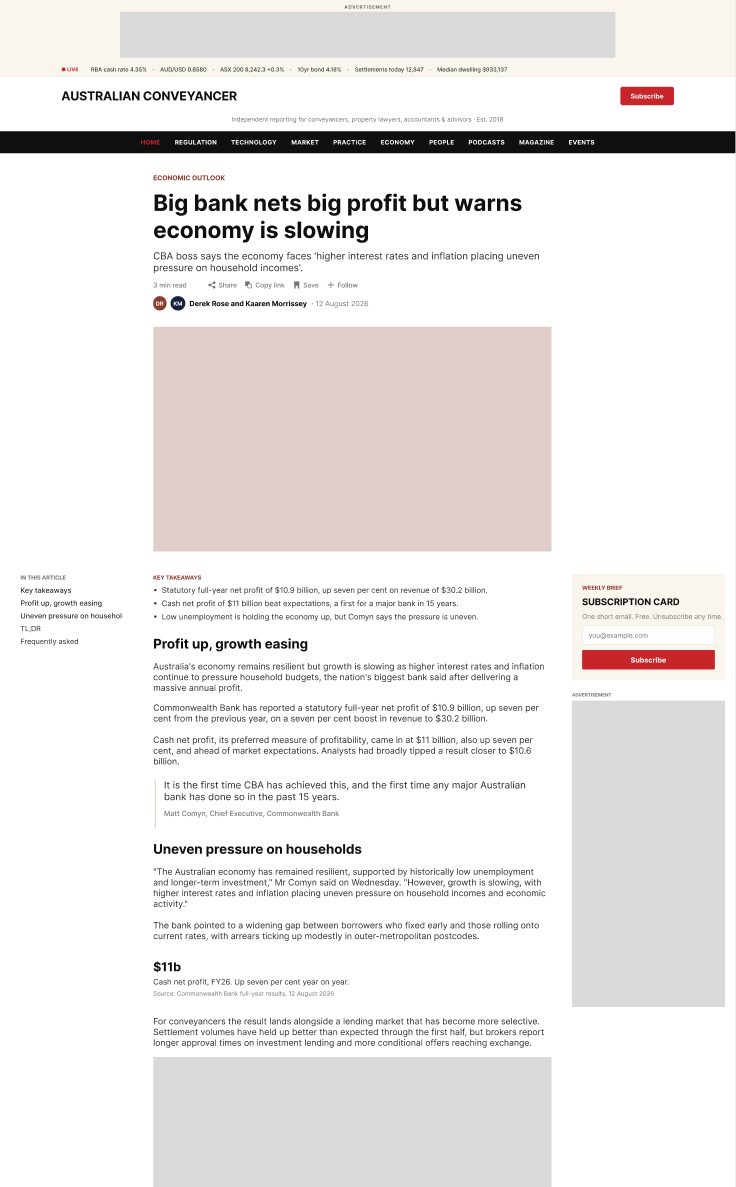
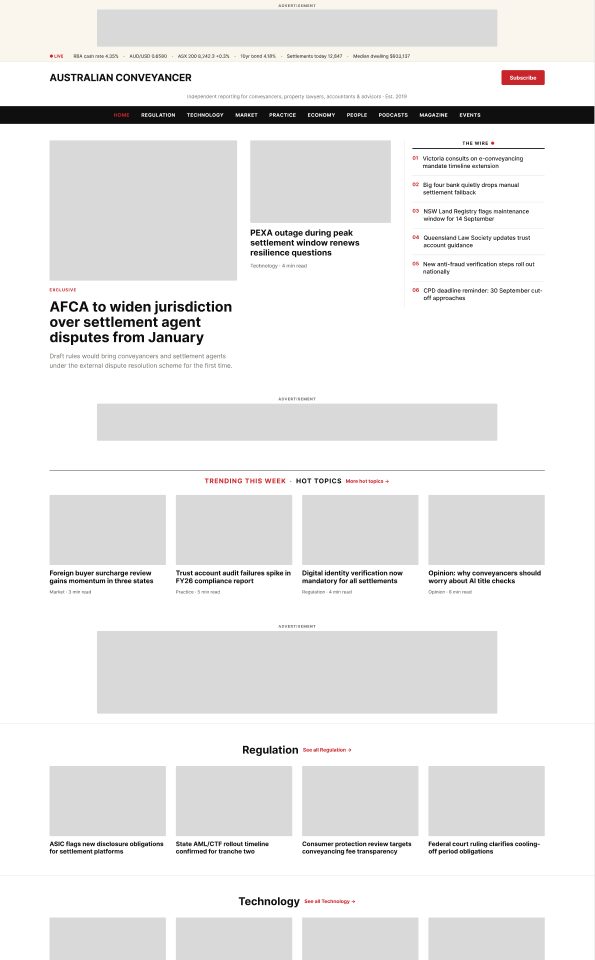
WireframesArticle and homepage templates
Video stays on YouTube
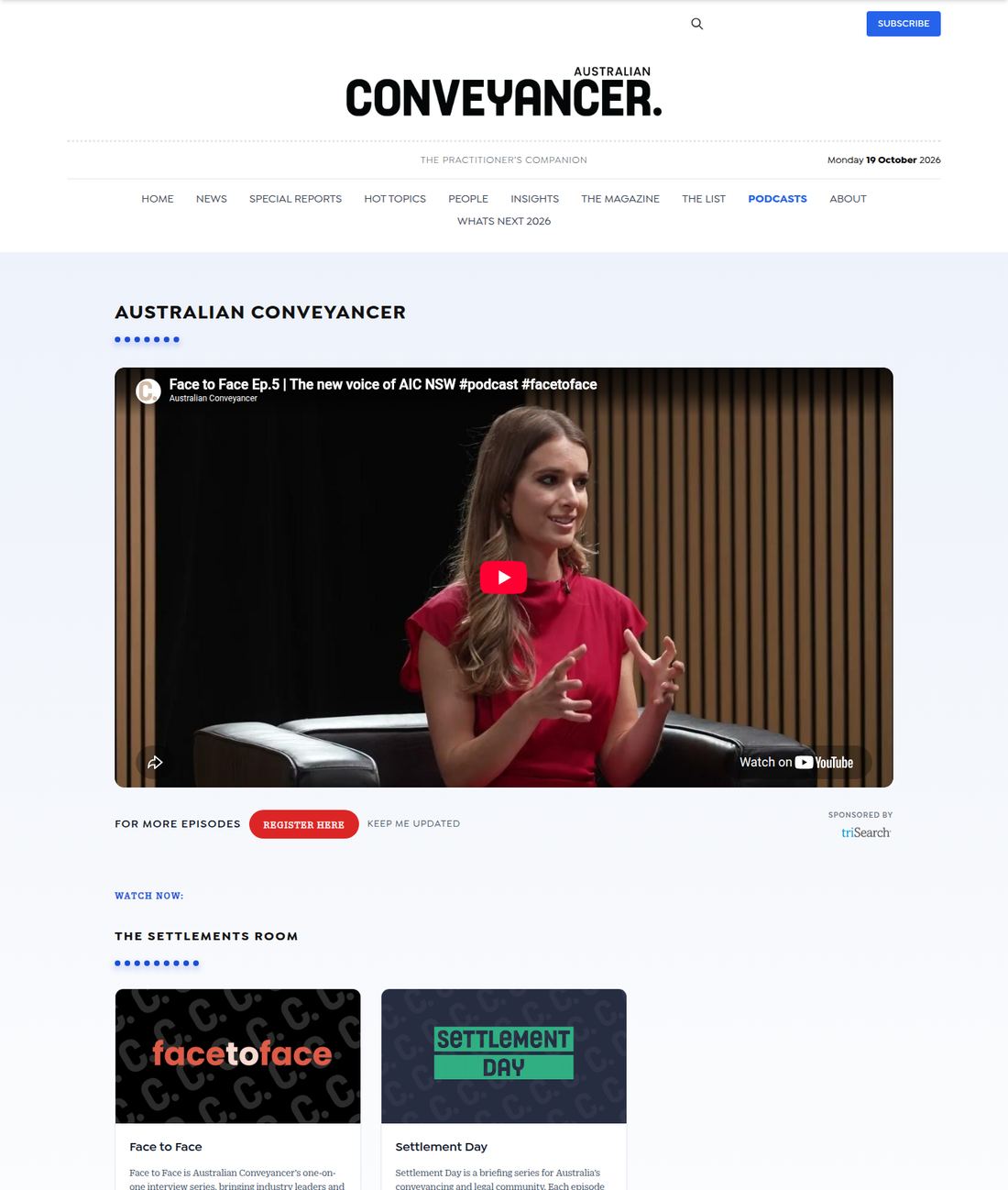
The audience already watches there, so each episode is embedded beside its show notes.
No subscriber data on the site
Newsletter sign-ups go straight to Mailchimp, rather than storing subscriber details in the publishing CMS.
One template for every section
Every news section shares one template, so a new section needs no new code.
A story should be the beginning, not the end.
The platform is designed around one idea: make useful journalism easier to discover, revisit and support. Four changes give that idea practical form.
Explainers
An explainer makes a complex issue understandable, then connects readers to the reporting behind it.
Story timelines
The AML/CTF timeline turns months of developments into a single, dated resource readers can return to as reform progresses.
Journalist and organisation profiles
Profiles connect people and organisations with relevant reporting across the archive.
Content workflows
Editorial workflows help add context to existing reporting, with publication decisions remaining in newsroom hands.
Answers on every article
Useful summaries and FAQs help readers understand an issue and navigate deeper coverage.
Structured data
Structured data clarifies the relationships between articles, authors, episodes and organisations.
Open to AI platforms
Machine-readable guidance and crawler settings support discovery, without guaranteeing AI citation or referral traffic.
Fast, from Sydney
Pages built in advance and served close to readers.
Magazine reader
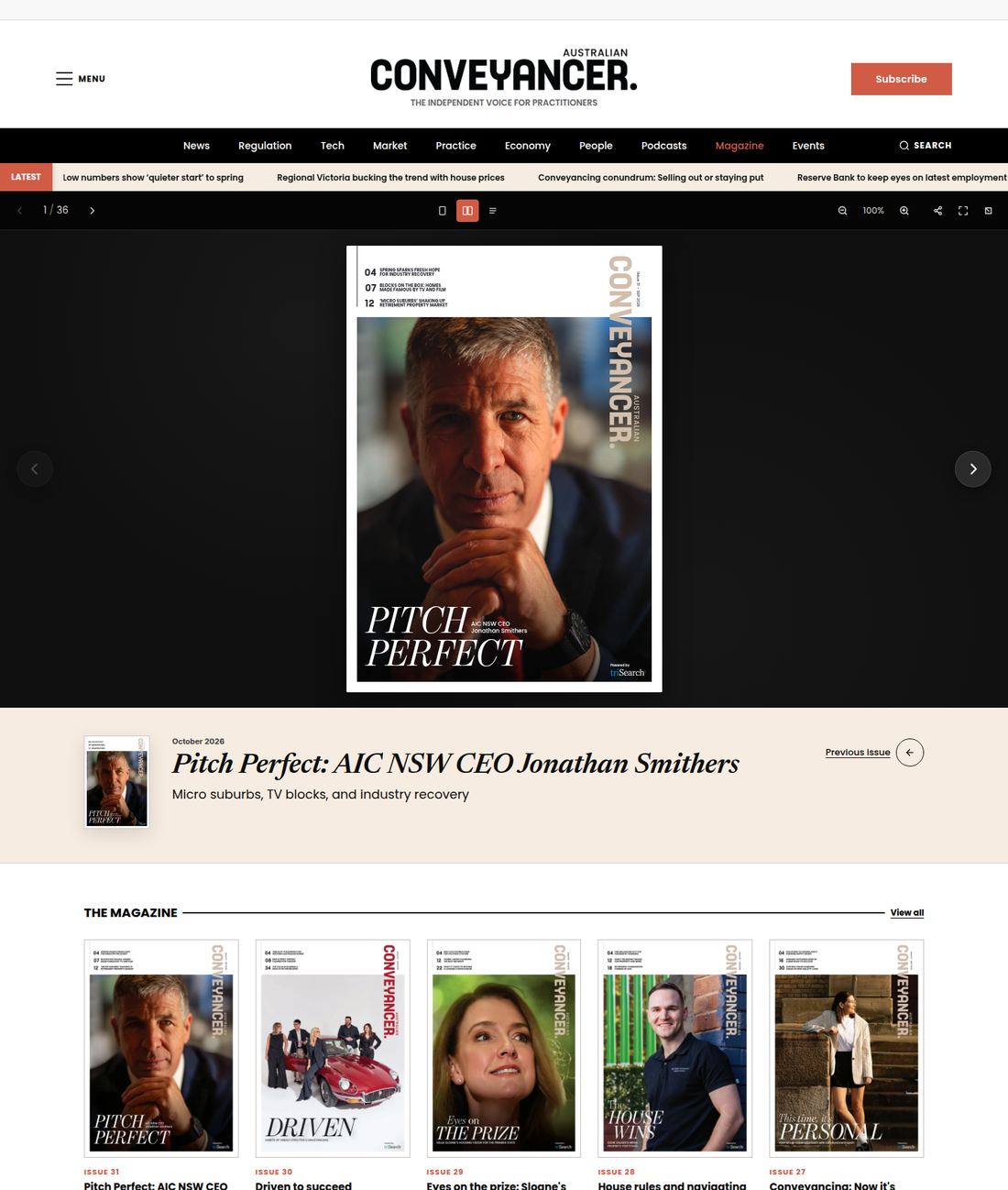
Magazine editions live on the publication’s own website alongside its digital reporting.
Podcasts
Settlement Day, Face to Face and partner programmes each have episode pages with video, guests and supporting editorial.
Events
Industry events have dedicated, searchable pages, bringing another part of the publication into the same experience.
Newsletter and RSS
Newsletter sign-ups and feeds connect distribution channels to the publication’s editorial workflow.
Advertising built in
Familiar display formats remain available across the publication.
Sponsored content
The triSearch-supported AML/CTF timeline shows how a commercial partner can support an enduring editorial resource rather than rely solely on a conventional ad placement.
An owned audience
A sponsor can connect with a professional audience through related editorial resources, podcast episodes, events and newsletters, with a more coherent proposition across formats.
No developer needed
Editors publish in Storyblok's visual editor and run the news ticker themselves.
A richer article, without another hour of production.
A newsroom should spend its time reporting and making editorial decisions, not repeatedly formatting material for different channels. Bushnote built assisted workflows for preparing drafts, adding context and assembling supporting material. Every story still needs human review and approval.
Relevant source material, context, quotations and multimedia can be assembled for editorial review, creating a more useful article than a standalone wire report.
On-brand supporting graphics can make complex subjects easier to understand and share.
Drafts are guided by Australian Conveyancer’s editorial style, with editors responsible for checking voice, accuracy and suitability.
Workflows can flag issues for legal or regulatory review. They do not replace professional verification or editorial responsibility.
Content remains unpublished until a journalist or editor checks and approves it.
Training sessions and video walkthroughs make the workflow easy to use, and give new starters what they need to keep the editorial standard high.
See the difference in the reading experience.
Drag across each image to compare the old site with the new one.
A clear editorial order: the lead story, the latest headlines and voices from the industry.
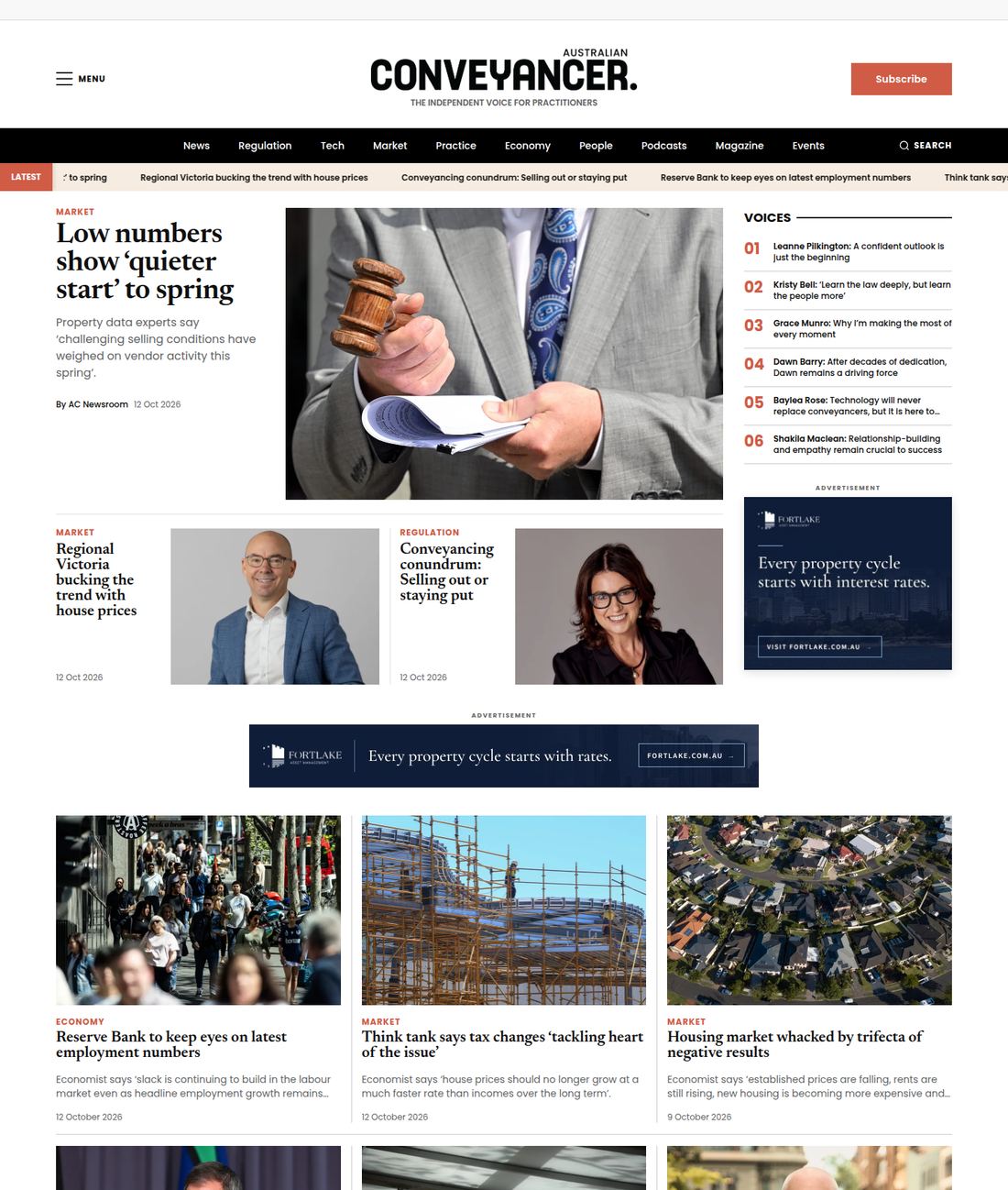 BeforeAfter
A clean reading experience, with a byline linked to each journalist's profile.
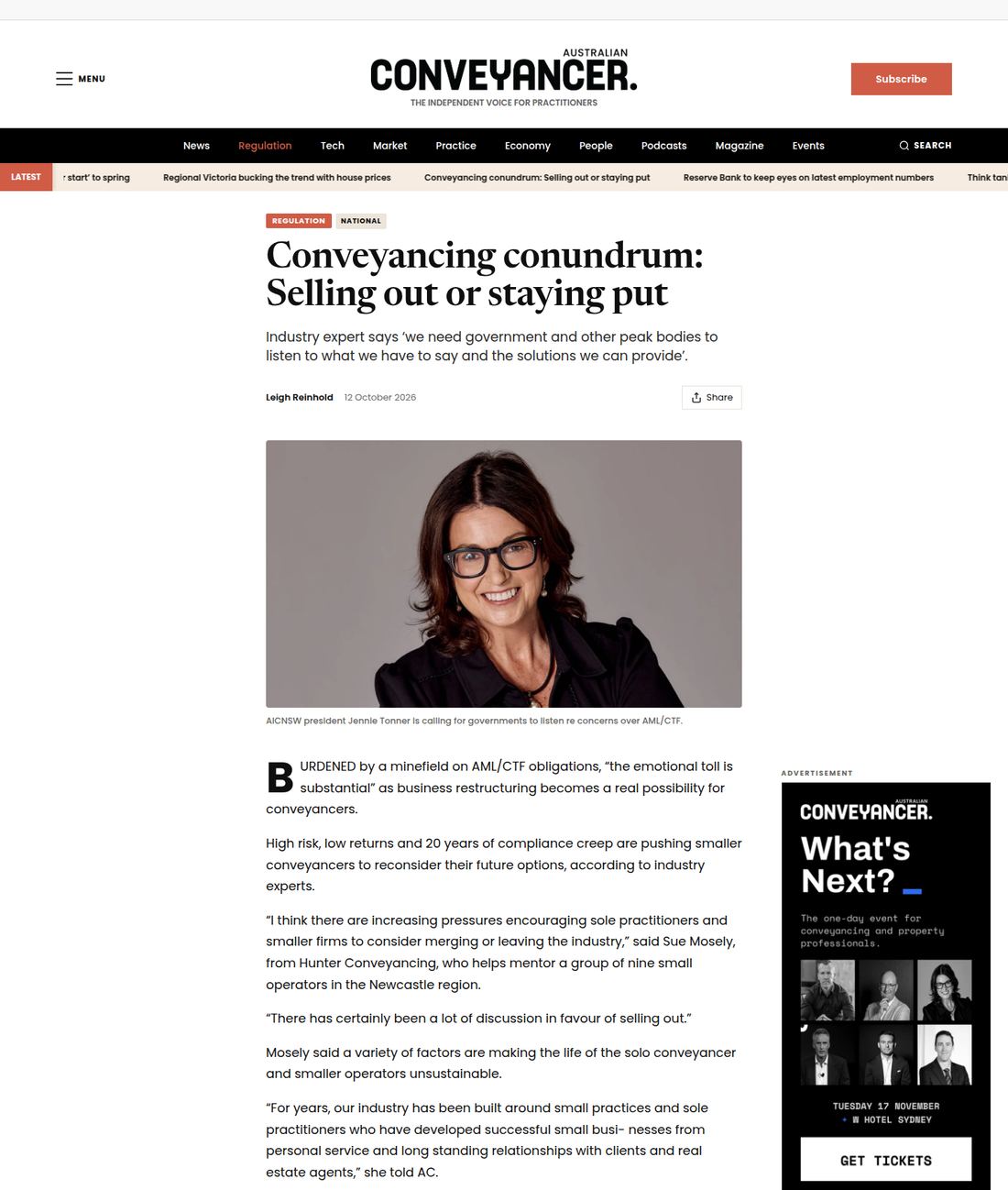 BeforeAfter
Every edition moved from Issuu to Australian Conveyancer's own website.
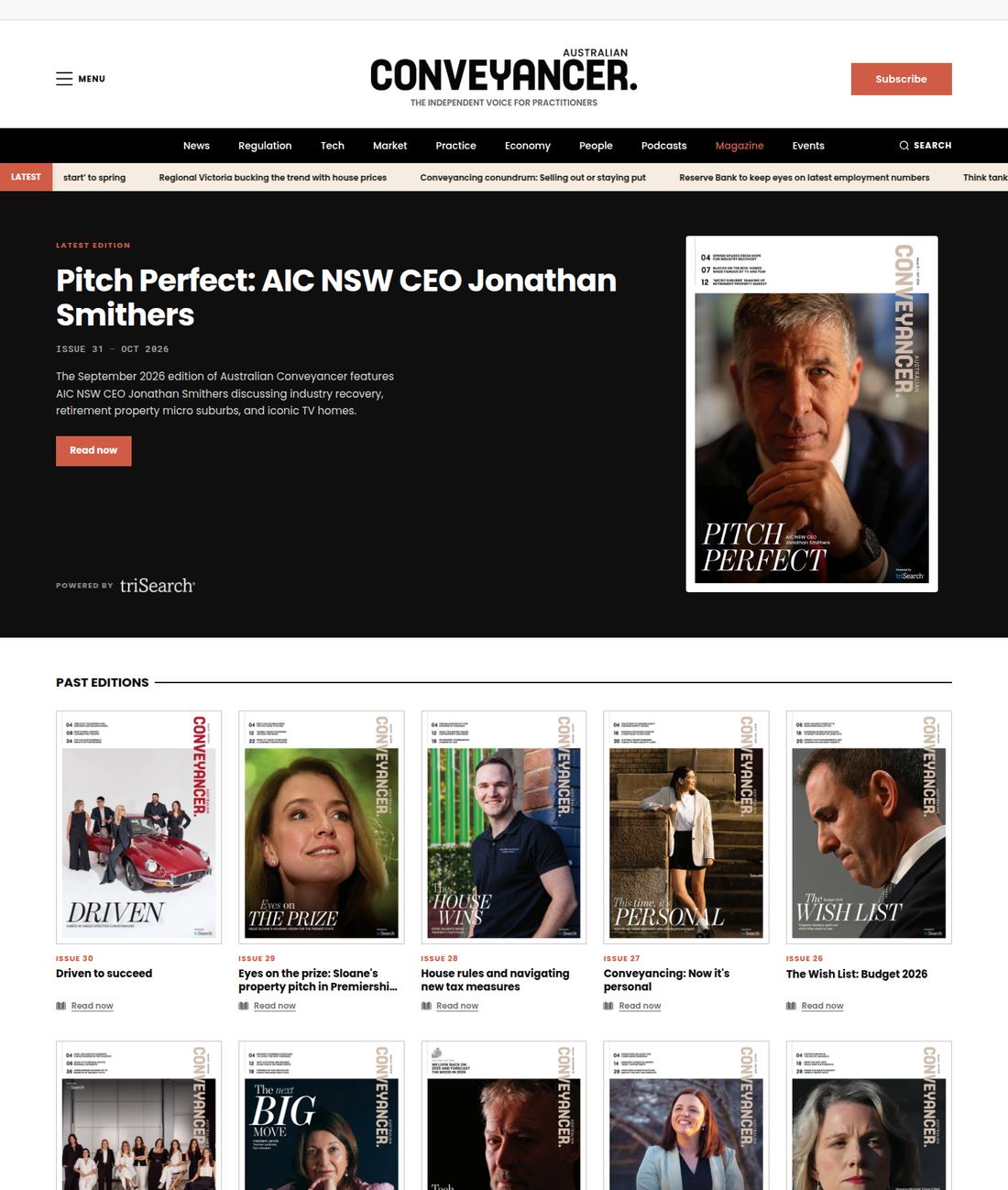 BeforeAfter
Each episode has its own page, with the video, show notes and guests together.
 BeforeAfter

NewStory timelines
NewMagazine reader
A publishing stack built around the newsroom.
Storyblok gives editors direct control of publishing. Astro and Vercel provide fast pages, while email subscriptions go directly to Mailchimp rather than being stored on the website.
From newsroom to reader. Subscriber details go straight to Mailchimp and never touch the site.

Storyblok
Content

Astro
Front end

Vercel
Hosting

GitHub
Code

Mailchimp
Newsletter

YouTube
Video

Figma
Design

Search Console
Google search

Bing Webmaster
Bing search

Google Analytics
Audience

Semrush
Research

Profound
AI visibility
The first result: a materially better reading experience.
The rebuilt website is already demonstrably faster and more accessible in pre-launch testing. Performance rose from 60 to 96 in Lighthouse, while accessibility rose from 75 to 95. Those are technical results, not claims of revenue growth. The longer-term test is whether more practitioners discover, revisit and engage with the publication, and whether that engagement creates value for commercial partners.
Performance
96
Old site 60
Accessibility
95
Old site 75
Best practices
100
Old site 69
SEO
100
Old site 92
Agentic browsing
4/4
Old site 2/4
Google Lighthouse scores, October 2026. The old site was measured live and the new site before launch. Old site Search Console baseline, September 2026: 1,410 clicks and 86,000 impressions.
“The challenge wasn't simply to modernise a website. Australian Conveyancer produces reporting, a magazine, podcasts and events, and we wanted those to add up to something greater. Bushnote understood that we needed a stronger publishing business, not just a better-looking site. The new platform gives our journalism room to work harder, and gives our partners more meaningful ways to support it.”
Tony Gillies
Head of Australian Conveyancer
The team who built the website.

Tony Gillies
Head of Australian Conveyancer
Tony Thomas
Production Editor
Tracey Journeaux
Graphic Designer

James Dore
Strategy Director
Xaviery Malinao
Search Strategist
Rainnand Montaniel
Developer and AI Workflow Engineer
Is your best content doing enough for your business?
Your next opportunity may already be in your archive, your newsletter or the audience listening to your podcasts. Bushnote helps specialist publishers connect those assets into a platform built for readers and commercial growth.
Get in touch


